
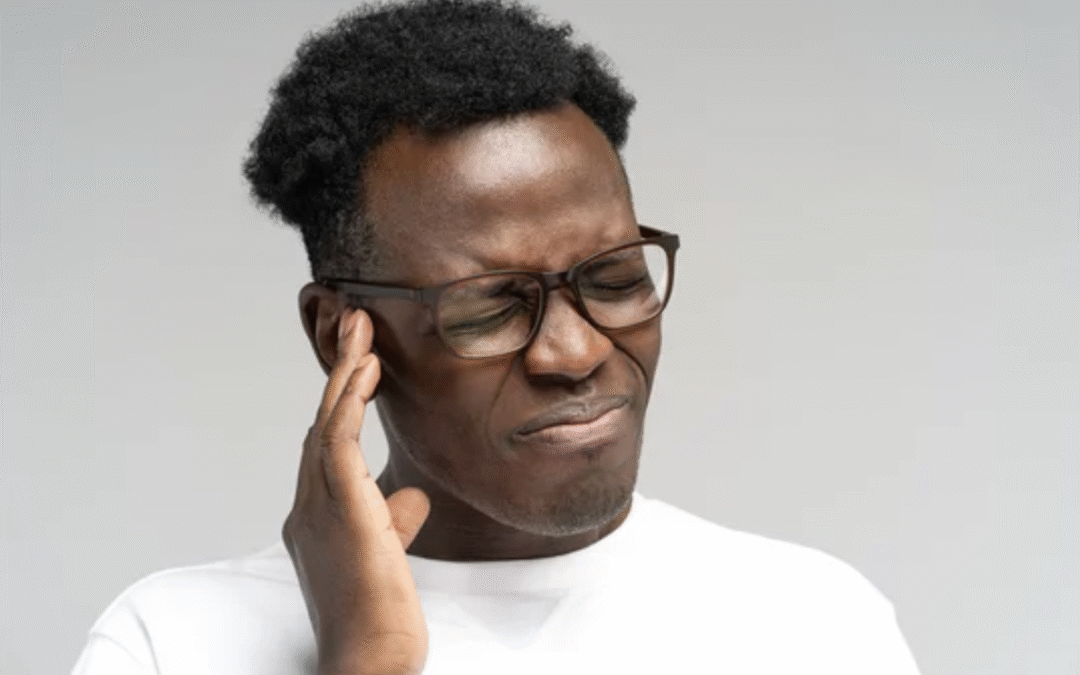
Q: I’m experiencing clicking, popping, and ringing in my ears, but all the tests say my hearing is normal. Can you help?
Tinnitus with no ear damage? The problem might not be your ears. If you’ve been cleared of ear infections, hearing loss, wax buildup, or Ménière’s disease by your doctor, but you’re still hearing phantom sounds—like clicking, popping, fullness, or ringing (tinnitus)—then muscle and nerve tension might be to blame.
What Is Tinnitus?
Tinnitus is the medical term for hearing sounds—such as buzzing, clicking, or ringing—that have no external source. While it’s often attributed to inner ear dysfunction, non-ear-related causes are commonly overlooked.
Muscular Referral Patterns: The Hidden Culprit
Many clients are surprised to learn that their ear symptoms are often caused by trigger points in surrounding muscles, particularly those in the neck and jaw.
Common Muscle Culprits
-
Sternocleidomastoid (SCM) – a major neck flexor and rotator
-
Masseter (deep fibers) – primary chewing muscle
-
Medial & Lateral Pterygoids – jaw stabilizers and movers
These muscles have well-established referral patterns that include symptoms such as:
-
Ear fullness or “blockage”
-
Ringing or buzzing sounds
-
Clicking or popping in the ear
-
Subjective hearing loss (not picked up by tests)
Trigger Points & Referred Ear Pain
Trigger points, first mapped by Dr. Janet Travell, are known to create symptoms away from the source muscle. About 90% of people experience pain or odd sensations like numbness, tingling, or pressure due to these referral pathways.
Many of the muscles listed above can refer discomfort directly into the ear, creating symptoms that mimic inner ear disorders.
Neck, Jaw & Tinnitus: The Biomechanical Connection
There’s a strong link between jaw alignment, neck posture, and ear function. Dysfunction in one often affects the others.
Trigeminal-Cervical Convergence
The trigeminal nerve (CN V) and cervical spinal nerves (C1–C3) converge in the trigeminocervical nucleus of the brainstem, explaining why:
-
Jaw dysfunction can trigger neck pain
-
Neck dysfunction can create tinnitus or facial discomfort
Myofascial and Postural Interplay
-
Forward head posture strains both jaw and neck muscles
-
Bruxism (teeth grinding) tightens neck stabilizers
-
TMJ dysfunction disrupts cervical alignment
-
Whiplash and concussions alter normal nerve input/output
Common Symptoms Linked to Muscle-Based Tinnitus
-
Clicking, popping, or ringing in one or both ears
-
Ear fullness with no wax or fluid
-
Headaches
-
Jaw tightness or pain
-
Neck tension or stiffness
-
Difficulty chewing
-
Dizziness or vertigo
-
Tinnitus that worsens with poor posture or stress
Clinical Evaluation and Myofascial Treatment
If medical imaging and hearing tests have ruled out disease or damage, it’s time to consider soft tissue causes.
What to Expect in a Clinical Assessment
-
Posture analysis and jaw range of motion
-
Palpation of SCM, masseter, and upper cervical muscles
-
Orthopaedic testing to rule out nerve entrapment or instability
-
Collaboration with dental providers when appropriate
My Treatment Approach Includes:
-
Myofascial Release Therapy
-
Trigger point-informed techniques (not conventional trigger point therapy)
-
Postural correction and re-education
-
Neck and TMJ mobilization
-
Strengthening for jaw, neck, and thoracic stabilizers
Many clients report relief from tinnitus, ear pressure, and even pseudo-hearing loss once these dysfunctions are addressed.
Can I Have Hearing Loss AND Myofascial Dysfunction?
Yes. In fact, having both structural and soft tissue issues can make ear symptoms feel worse or harder to resolve. That’s why a whole-body approach is critical to effective treatment.
Let’s Get to the Root of Your Ear Symptoms
If you’re experiencing unexplained ringing, pressure, or clicking in your ears—but your tests are normal—soft tissue treatment might be the missing link.
Contact me today to schedule a clinical assessment and build a treatment plan tailored to your needs.